
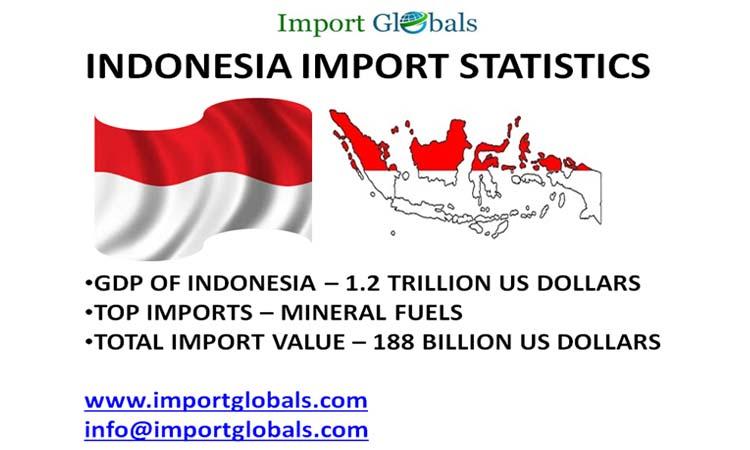
Indonesia Import Data – Based on Import Globals Verified Data

Indonesia Import Data highlights the country’s growing dependence on global trade to support its expanding industrial and consumer economy. According to Import Globals, Indonesia’s total imports are estimated to reach approximately USD 255 billion in 2024, accounting for around 1.03% of total global imports and ranking among the top 30 importers worldwide.
Indonesia’s import structure is largely driven by energy, industrial inputs, and technology products. The most imported product is refined petroleum, contributing about 14.22% (USD 36.3 billion) of total imports, followed by crude petroleum (8.91%) and telecommunication equipment (6.85%). These imports are essential for fueling the country’s industries, transportation systems, and growing urban population.
Other major imports include electronic integrated circuits (6.02%), iron & steel (5.43%), gold (4.72%), and automobiles (4.35%). Additionally, agricultural imports such as wheat and soybeans play a key role in meeting domestic food demand. This diversified import structure reflects Indonesia’s dual reliance on both industrial raw materials and consumer goods.
Indonesia maintains strong trade relationships with major global partners. According to Import Globals data, the top import sources include China (29.23%), Singapore (10.91%), Japan (10.02%), Malaysia (7.42%), and South Korea (6.65%). China dominates as the largest supplier, particularly in machinery, electronics, and industrial inputs.
Indonesia’s import trends clearly reflect its manufacturing-driven economy, where imported raw materials and components are used to produce finished goods for both domestic use and export. The country’s growing infrastructure and industrial sectors continue to drive import demand.
Import Globals provides highly detailed Indonesia Import Data, including shipment records, HS codes, product descriptions, importer/exporter names, values, quantities, ports, and transportation modes. This customs-based data allows businesses to track trade flows, analyze competitors, and identify sourcing opportunities.
With insights from Import Globals, companies can make data-driven decisions, reduce risks, and expand globally. Whether you are an exporter, importer, or market analyst, Indonesia Import Data is an essential resource for understanding international trade dynamics and unlocking new business opportunities.


