
Plaque vs. Tartar: Why Your Dental Hygienist Appointment Matters
If you have ever run your tongue over your teeth after a long day and noticed a fuzzy or "sticky" coating, you have encountered plaque. While it might seem like a minor inconvenience easily brushed away, this biofilm is the starting point for nearly all dental complications, from tooth decay to gum disease. For those living and working in the fast-paced environment of the City of London, maintaining oral health isn't just about a bright smile; it is about systemic wellness and professional confidence.
Understanding the transition from plaque to tartar is essential for any patient invested in long-term oral health. While daily habits are your first line of defence, professional intervention from a skilled dental hygienist is the only way to manage the more stubborn elements of dental buildup. This guide explores the critical differences between these two substances and why regular clinical hygiene appointments are a non-negotiable part of your healthcare routine.
The Sticky Truth: What is Plaque?
Plaque is a soft, sticky, colourless film of bacteria that constantly forms on your teeth. It develops when bacteria in your mouth mix with sugary or starchy foods—like that mid-morning pastry or your afternoon latte. These bacteria produce acids that attack your tooth enamel and can irritate your gum tissue.
The characteristics of plaque include:
- Consistency: Soft and easily removed with a toothbrush and dental floss.
- Formation: It begins to form within four to twelve hours after brushing, which is why the "twice-a-day" rule is so vital.
- Impact: If left untreated, the acids in plaque cause cavities (caries) and gingivitis (early-stage gum disease).
Because plaque is often invisible, many patients in London clinics are surprised to learn how much is actually present. A skilled hygienist may use disclosing tablets—a harmless dye—to highlight areas where plaque is hiding, usually along the gumline or between teeth.
The Hard Reality: What is Tartar?
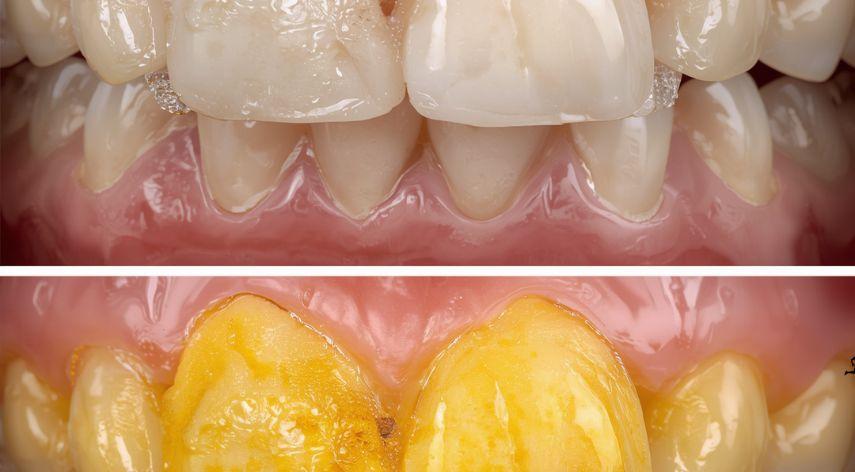
When plaque is not removed through regular brushing and flossing, it reacts with the minerals in your saliva and undergoes a process called mineralisation. Within just 24 to 72 hours, this soft film can harden into tartar, also known as dental calculus.
Unlike plaque, tartar is:
- Consistency: Hard, porous, and firmly bonded to the tooth enamel.
- Appearance: It often appears as a yellow or brown stain, typically found along the gumline or behind the lower front teeth.
- Removal: Tartar is "bonded" to the tooth. It cannot be removed with a toothbrush, no matter how hard you scrub.
Once tartar forms, it acts as a "scaffold" for more plaque to grow on top of, creating a cycle of inflammation. This leads to more advanced gum disease, known as periodontitis, which can result in bone loss and eventually tooth loss if not addressed by an experienced clinician.
The Role of the Dental Hygienist: Beyond the "Clean"
Many people view a hygiene appointment as a cosmetic "buff and polish." In reality, these appointments are clinical preventative treatments. A skilled dental hygienist in London uses specialised tools to perform "scaling and polishing," a process designed for minimising discomfort while effectively removing tartar from areas your toothbrush simply cannot reach.
Why Home Care Isn't Enough
Even with the most advanced electric toothbrush and meticulous flossing, most people have "blind spots"—the nooks and crannies around wisdom teeth or beneath the gumline. A hygienist uses ultrasonic scalers and hand instruments to vibrate and lift away tartar without damaging the enamel.
|
Feature |
Plaque |
Tartar (Calculus) |
|
Texture |
Soft and sticky. |
Hard and crusty. |
|
Removal Method |
Brushing and flossing at home. |
Professional scaling by a clinician. |
|
Timeframe |
Forms constantly. |
Develops from plaque in 1–3 days. |
|
Clinical Risk |
Cavities and gingivitis. |
Periodontitis and tooth loss. |
Minimising Discomfort During Your Visit
We understand that for many in the City, a trip to the dentist can feel daunting or physically uncomfortable. Modern hygiene practices focus heavily on minimising discomfort.
If you have sensitive teeth, your hygienist can use:
- Guided Biofilm Therapy (GBT): A state-of-the-art approach using warmed water and fine powder to gently clean the teeth.
- Topical Anaesthetic Gels: These can be applied to the gums to ensure the scaling process is as comfortable as possible.
- Sedative Dressings: For patients with significant inflammation, clinicians focus on a gentle approach to settle the tissues before deeper cleaning.
Please note that for new patients or those who have not had a cleaning in a significant amount of time, a mandatory assessment fee (typically ranging from £50 to £95) may apply. This ensures the clinician can safely evaluate your gum health before proceeding with treatment.
The Systemic Connection
Recent clinical studies have shown a strong link between oral health and overall physical health. Chronic inflammation in the gums (caused by tartar buildup) has been associated with:
- Cardiovascular Disease: Bacteria from the mouth can enter the bloodstream.
- Diabetes: Gum disease can make it harder to control blood sugar levels.
- Respiratory Issues: Bacteria can be inhaled into the lungs, potentially causing infections.
By attending regular appointments in London, you are not just looking after your teeth; you are investing in your long-term systemic health. High clinical success observed in suitable candidates who maintain a 6-monthly hygiene recall schedule.
Frequently Asked Questions
1. How often should I see a dental hygienist? For most patients, a visit every six months is recommended. However, if you have a history of gum disease or are a smoker, your experienced clinician may suggest a visit every three months to prevent tartar buildup.
2. Does removing tartar hurt? While you may feel a vibrating sensation or a slight scraping, the process is designed for minimising discomfort. If you have sensitive teeth, let your hygienist know so they can adjust their technique or use numbing gels.
3. Why do my gums bleed after brushing? Bleeding is often a sign of gingivitis, caused by plaque irritating the gums. Paradoxically, you shouldn't stop brushing; instead, you should book a hygiene appointment to remove the underlying cause of the irritation.
4. Can whitening toothpaste remove tartar? No. While whitening toothpastes may help remove surface stains, they cannot dissolve or remove hardened tartar. Only professional scaling can do that.
5. Is the assessment fee necessary? Yes. A mandatory assessment allows the clinician to check for oral cancer, gum recession, and the depth of "pockets" around your teeth to ensure the treatment is safe and effective for you.
Conclusion
The battle between plaque and tartar is won through a combination of diligent home care and professional expertise. While plaque is a daily reality, tartar is a clinical challenge that requires the intervention of a skilled dental hygienist. In the heart of the City of London, taking an hour out of your schedule for a professional cleaning is one of the most effective ways to prevent pain, save money on future restorative work, and protect your overall health.
High clinical success is observed in suitable candidates who prioritise preventative care. By focusing on minimising discomfort and using the latest clinical techniques, our goal is to ensure your smile remains healthy, functional, and bright.
Medical Disclaimer: This content is for informational purposes only and does not constitute medical advice. Always seek the advice of a qualified dental professional regarding any medical condition or treatment.


